
 English
 Español
 Portugues
 Pусский
 Français
 日本語
日本語 한국어
한국어 العربية
 Italiano
 Nederlands
 Polski
 ไทย
ไทย Türk dili
 हिन्दी
 Indonesia
 Melayu
 Tiếng Việt
 čeština
 Română
High pressure dual check valve for rocket engines
A high-pressure dual check valve is a critical fluid-control component used in rocket engine systems to ensure safe, reliable, and one-directional flow of propellants, pressurants, or purge gases under extreme operating conditions. It is designed to prevent reverse flow, isolate subsystems, and maintain system integrity during engine start, shutdown, and transient pressure events. In rocket propulsion applications, where pressures, temperatures, vibration, and shock loads are severe, the dual check valve plays an essential role in protecting sensitive components and supporting consistent engine performance.The “dual” configuration typically means the valve incorporates two check mechanisms in a single assembly or two independent flow paths within one housing. This design increases redundancy and reliability, helping to reduce the risk of backflow if one sealing element is affected by wear, contamination, or thermal distortion. In aerospace systems, such redundancy is highly valued because a single failure can lead to loss of performance or mission failure. By combining two check functions, the valve can improve operational safety while maintaining a compact footprint suitable for space-limited engine layouts.High-pressure dual check valves must be engineered to withstand intense internal pressure loads without deformation or leakage. Materials are selected for strength, corrosion resistance, low outgassing, and compatibility with cryogenic or reactive fluids. Common design considerations include stainless steels, nickel-based alloys, and other high-performance metals capable of surviving repeated thermal cycling and mechanical stress. Sealing surfaces are machined to tight tolerances to ensure bubble-tight shutoff and dependable sealing over long service intervals. In many cases, precision springs, poppets, or ball elements are used to control opening and closing behavior with minimal pressure drop.Another important feature is responsiveness. Rocket engines often experience rapid pressure changes, so the valve must open quickly when forward flow is needed and close immediately when flow reverses. This fast reaction helps prevent pressure surges, protects turbopumps and feed lines, and avoids unwanted mixing of fluids. Low cracking pressure is often desirable to reduce flow resistance, while stable resealing performance is essential to stop reverse migration. The internal geometry is therefore optimized to balance flow efficiency, sealing reliability, and dynamic stability.Environmental robustness is also a key requirement. The valve must function under vibration, acceleration, and acoustic loads generated during launch and engine operation. It may also be exposed to extremely low temperatures in cryogenic systems or high temperatures in hot-gas environments. To ensure performance in these conditions, engineers conduct rigorous testing, including proof pressure tests, leak checks, thermal cycling, vibration qualification, and endurance cycling. These tests verify that the valve can operate consistently throughout the mission profile.In summary, a high-pressure dual check valve for rocket engines is a specialized safety and control device that provides reliable one-way flow protection in demanding propulsion environments. Its redundant check structure, durable materials, precision sealing, and rapid response make it an important component for maintaining engine safety, efficiency, and mission reliability.
Produkt
Kategorie:
-
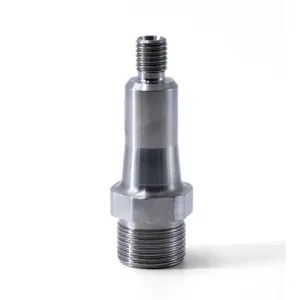
High pressure dual check valve for rocket engines
Ihre Klassifizierung: Safety Valve / Check ValveAnsichten: 409Nummer:Veröffentlichungszeit: 2026-10-23 18:11:08Valve Body Material: 06Cr19Ni10 GB/T1220-2007
Sealing Material: GH4169 GJB713-89
Working Medium: Gas, Liquid
Nachrichten
Kategorie:
Keine Suchergebnisse!
Fall
Kategorie:
Keine Suchergebnisse!
Video
Kategorie:
Keine Suchergebnisse!
Herunterladen
Kategorie:
Keine Suchergebnisse!
Rekrutierung
Kategorie:
Keine Suchergebnisse!
Empfohlene Produkte
Keine Suchergebnisse!



 WhatsApp
 Telefon